
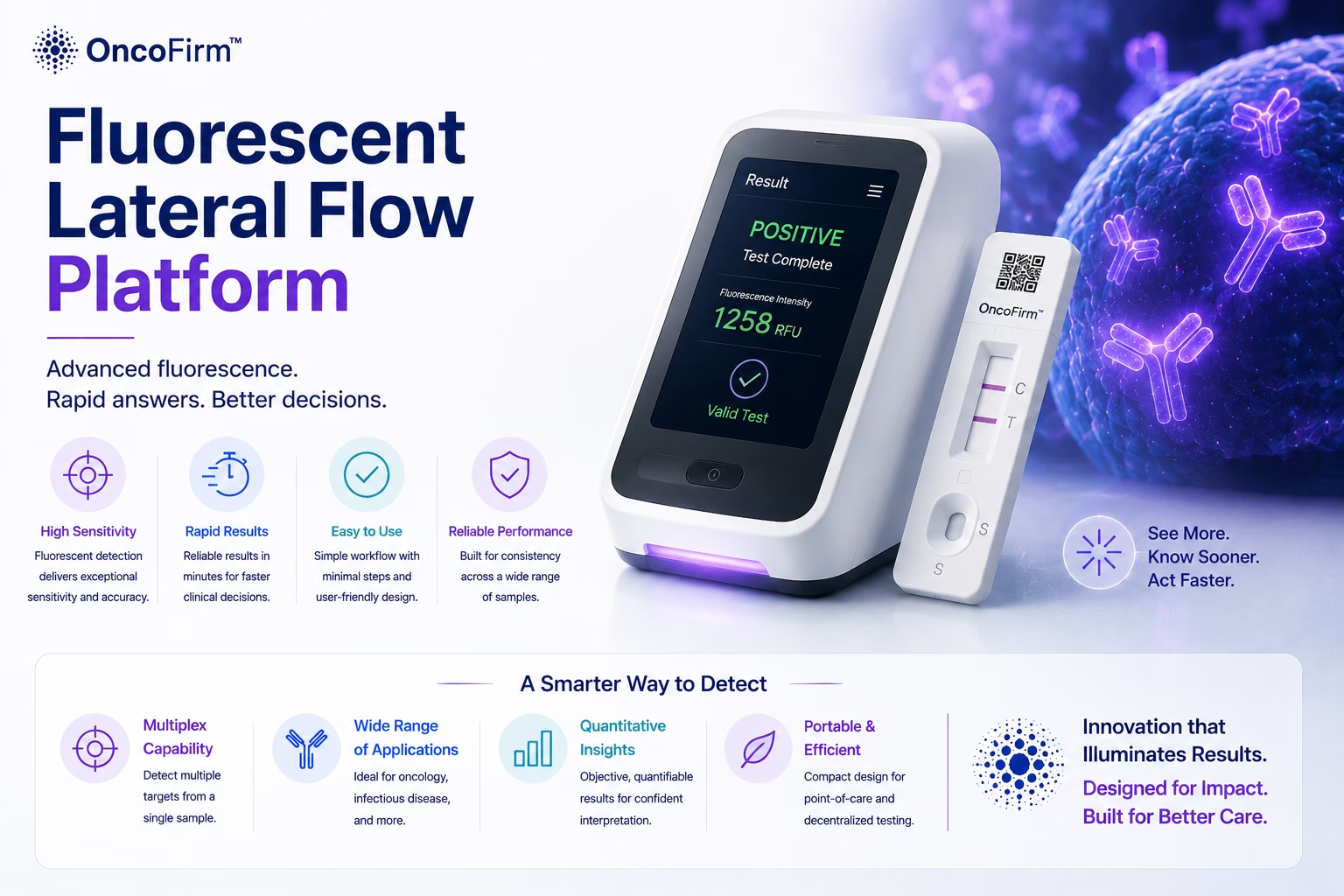
Fluorescent Lateral Flow Platform | OncoFirm™ Technology
Fluorescent Lateral Flow Platform: Next-Generation Technology for Early Cancer Diagnostics
Fluorescent Lateral Flow Platform
Advancing Early Cancer Diagnostics Through High-Performance Immunodiagnostics
The future of cancer diagnostics depends on technologies capable of delivering accurate, rapid, and accessible biomarker analysis. At OncoFirm™, we are developing a proprietary Fluorescent Lateral Flow Platform that combines advanced immunochemistry, fluorescence-based detection, digital signal analysis, and scalable assay design to support the next generation of early cancer diagnostics.
Built upon the established principles of lateral flow immunoassays, our platform incorporates modern fluorescence detection technologies and digital interpretation to investigate enhanced analytical performance for antigen-based biomarker detection.
Our objective is to develop technologies that complement laboratory medicine while expanding opportunities for future point-of-care diagnostic applications.
What Is a Fluorescent Lateral Flow Platform?
A fluorescent lateral flow platform is an advanced immunodiagnostic system that detects biological targets using fluorescence rather than conventional colorimetric labels.
Like traditional lateral flow assays, samples migrate across a membrane through capillary action. However, instead of producing a visually interpreted colored line, fluorescent reporter particles generate measurable optical signals that are detected by specialized readers.
These digital measurements enable objective interpretation and integration with modern diagnostic software.
Scientific Principles
Our platform is based on the highly specific interaction between antibodies and target antigens.
The analytical workflow generally includes:
Sample Collection
A biological specimen—such as whole blood, serum, plasma, or another validated sample—is introduced into the test device.
Antigen Recognition
Target biomarkers bind to highly specific detection antibodies labeled with fluorescent particles.
Signal Generation
Immune complexes migrate across the membrane and are captured by immobilized antibodies at designated reaction zones.
Fluorescence Detection
An optical reader excites the fluorescent labels and measures emitted light intensity.
Digital Analysis
The measured signal is processed using analytical software to generate standardized results appropriate for the assay’s intended use.
Platform Architecture
The OncoFirm Fluorescent Lateral Flow Platform integrates several key components.
Advanced Antibody Technology
Assay performance begins with highly specific antibody-antigen interactions.
Our development approach focuses on antibody selection and assay optimization to support reliable biomarker recognition while minimizing nonspecific binding.
Fluorescent Reporter Chemistry
Instead of traditional gold nanoparticles, the platform employs fluorescent reporter technologies that enable optical signal measurement.
Depending on assay design, fluorescent labels may offer:
- Digital signal detection
- Objective interpretation
- Broad analytical dynamic range
- Multiplex compatibility
- Integration with automated analysis
Performance characteristics depend on biomarker selection, assay optimization, and analytical validation.
Precision Optical Reader
The platform is designed to operate with a dedicated optical reader that measures fluorescence intensity with high reproducibility.
Reader capabilities may include:
- Automated calibration
- Signal quantification
- Quality control verification
- Data storage
- Secure connectivity
- Software integration
Digital readers reduce subjective interpretation and enable standardized analytical workflows.
Intelligent Software Integration
The platform architecture supports integration with digital diagnostic software capable of:
- Signal normalization
- Automated quality assessment
- Result reporting
- Data management
- Cloud connectivity
- AI-assisted interpretation
- Laboratory information system (LIS) compatibility
This digital infrastructure supports scalable deployment and future interoperability with healthcare systems.
Why Fluorescence?
Fluorescent detection has become an important area of research in immunodiagnostics because it enables sensitive optical measurement of biomarker-associated signals.
Compared with visually interpreted assays, fluorescence-based platforms may provide:
- Objective digital measurement
- Quantitative or semi-quantitative analysis
- Reduced observer variability
- Multiplex biomarker capability
- Compatibility with computational analysis
- Improved workflow standardization
The extent of these advantages depends on assay design, instrumentation, and clinical validation.
Applications in Early Cancer Diagnostics
Cancer biomarkers often occur at low concentrations, particularly during early disease.
Fluorescence-based immunodiagnostics are being investigated for applications involving:
- Tumor-associated antigens
- Protein biomarkers
- Multiplex biomarker panels
- Disease monitoring
- Research and biomarker discovery
When integrated with validated assays and clinical workflows, these technologies may contribute valuable biological information alongside molecular diagnostics, pathology, and imaging.
Designed for Point-of-Care Innovation
One of the primary goals of lateral flow technology is to support diagnostic testing closer to the patient.
Our platform is being developed with future point-of-care applications in mind, including:
- Outpatient clinics
- Physician offices
- Community healthcare settings
- Mobile diagnostic programs
- Resource-limited environments
These technologies are intended to complement centralized laboratory testing while expanding access to diagnostic information where appropriate.
Multiplex Biomarker Detection
Cancer is a biologically diverse disease, and reliance on a single biomarker may not provide sufficient diagnostic information.
Our platform architecture is designed to support future multiplex assay development, enabling simultaneous evaluation of multiple cancer-associated antigens.
Potential advantages include:
- Broader biological insight
- Efficient sample utilization
- Streamlined workflows
- Comprehensive biomarker panels
Multiplex capabilities remain dependent on assay-specific development and validation.
Artificial Intelligence and Digital Diagnostics
Digital fluorescence measurements create structured datasets that can support advanced computational analysis.
AI-assisted software may contribute to:
- Automated signal interpretation
- Image quality assessment
- Background correction
- Trend analysis
- Workflow optimization
- Decision-support tools
Artificial intelligence is intended to complement laboratory expertise while improving analytical consistency and efficiency.
Research and Development
OncoFirm continues to advance its fluorescence platform through research in:
- Antibody engineering
- Biomarker discovery
- Optical detection technologies
- Signal amplification
- Assay optimization
- Digital diagnostics
- Analytical validation
- Manufacturing scalability
Our multidisciplinary approach integrates immunology, engineering, software development, and data science to support innovation in cancer diagnostics.
Technology Comparison
| Technology | Detection Method | Primary Strength |
|---|---|---|
| Conventional lateral flow | Colorimetric (gold nanoparticles) | Simple visual interpretation |
| Fluorescent lateral flow | Optical fluorescence | Digital measurement and quantitative capability |
| ELISA | Enzymatic colorimetric reaction | High-throughput laboratory testing |
| Chemiluminescent immunoassay | Light-emitting reaction | High analytical sensitivity in laboratory settings |
| Molecular diagnostics | DNA/RNA analysis | Genomic characterization |
Each technology addresses different clinical needs and often provides complementary information.
Our Vision
OncoFirm envisions a future in which fluorescence-based immunodiagnostics become part of an integrated diagnostic ecosystem that combines:
- Antigen technology
- Advanced fluorescence detection
- Artificial intelligence
- Digital health platforms
- Multiplex biomarker analysis
- Point-of-care testing
- Precision oncology
By integrating these technologies into a unified platform, we aim to support more accessible, scalable, and data-driven approaches to cancer diagnostics.
Frequently Asked Questions
What is a fluorescent lateral flow platform?
A fluorescent lateral flow platform is an immunodiagnostic system that detects biological targets using fluorescent labels measured by an optical reader rather than visually interpreted color changes.
How does fluorescence improve lateral flow assays?
Fluorescent detection enables digital measurement of biological signals and may support quantitative analysis, multiplex biomarker detection, and standardized interpretation depending on assay design.
Is this technology intended to replace laboratory testing?
No. Fluorescent lateral flow platforms are designed to complement established laboratory diagnostics and should be used according to their intended application and supporting evidence.
Can the platform support multiple biomarkers?
The platform architecture is designed to support multiplex assay development, enabling future evaluation of multiple biomarkers within a single test, subject to assay-specific validation.
Conclusion
Fluorescent lateral flow technology represents a significant advancement in immunodiagnostics by combining the simplicity of lateral flow assays with the precision of digital fluorescence measurement. As biomarker science, optical engineering, and artificial intelligence continue to evolve, fluorescence-based platforms are expected to play an increasingly important role in early cancer diagnostics, point-of-care testing, and precision oncology.
OncoFirm’s Fluorescent Lateral Flow Platform reflects our commitment to developing innovative diagnostic technologies that integrate advanced antigen detection, digital analysis, and scalable assay design. Through continued research, analytical validation, and collaboration, we aim to contribute to the next generation of rapid, accessible, and clinically informative cancer diagnostics.
Platform Highlights
- Proprietary fluorescence-based immunodiagnostic platform
- Advanced antigen detection technology
- High-affinity antibody design
- Digital optical signal measurement
- AI-ready analytical architecture
- Multiplex biomarker capability
- Point-of-care platform design
- Scalable manufacturing potential
- Research-driven innovation
Suggested Internal Links
Technology Pages
- Antigen Technology
- Digital Diagnostic Reader
- Artificial Intelligence Platform
- Biomarker Discovery
- Research & Development
Supporting Articles
- How Lateral Flow Assays Work
- Fluorescent vs. Gold Nanoparticle Assays
- Tumor Antigen Detection
- What Are Cancer Biomarkers?
- Point-of-Care Oncology
- AI in Cancer Diagnostics
- Liquid Biopsy Explained
- Latest Rapid Diagnostic Technologies
- Future of Cancer Screening
Suggested Peer-Reviewed References
- Posthuma-Trumpie GA, Korf J, van Amerongen A. Lateral Flow (Immuno)Assay: Its Strengths, Weaknesses, Opportunities and Threats. Analytical and Bioanalytical Chemistry. 2009.
- Bahadır EB, Sezgintürk MK. Lateral Flow Assays: Principles, Designs and Labels. Trends in Analytical Chemistry. 2016.
- Quesada-González D, Merkoçi A. Nanoparticle-Based Lateral Flow Biosensors. Biosensors and Bioelectronics. 2015.
- Sajid M, Kawde AN, Daud M. Designs, Formats and Applications of Lateral Flow Assays. Journal of Saudi Chemical Society. 2015.
- National Cancer Institute (NCI). Cancer Biomarkers and Early Detection Research.
- U.S. Food and Drug Administration (FDA). Guidance for In Vitro Diagnostic Devices.
- World Health Organization (WHO). Essential In Vitro Diagnostics.
- National Comprehensive Cancer Network (NCCN). Clinical Practice Guidelines in Oncology.